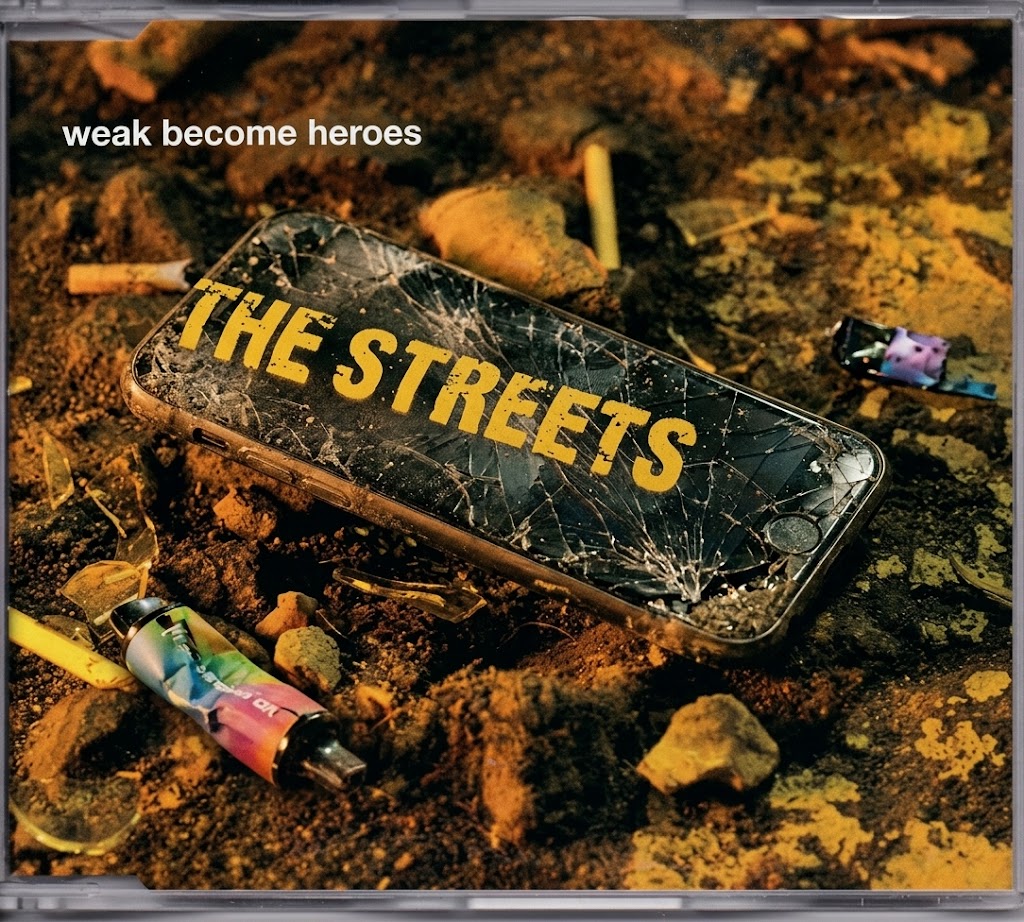
The song’s title captures something distinct: a feeling that every raver can resonate with. Yet, culturally, the songs speaks to a direct political experience. In the track, The Streets and the English vocalist Mike Skinner relay a distinct understanding of the UK Acid House and Rave culture in the 1990s. Prospecting to unearth hidden potential, Skinner’s monologue begins the track under a cold overcast sky, late winter after dark. The image is of a lonely street lamp, in the distance and blinking, as a melancholy piano and string orchestra come into audible focus. Speeding through the streets, passing the lamppost now, the narrator directs a cab driver to a covert location. Wrapped in secrecy, with an urgency to finding the spot, the atmosphere is ominous and telling; is it a covert operation, a space for clandestine activity, or some sort of criminal enterprise? Yet The Streets, in the next moment, reveal themselves. Like a human who anyone takes enough time to get to know, the Streets are a grander, far more nuanced and expansive place than the surface charm suggests.
In front of a plated metal door, patrolled by deadbeats and surrounded by casual fast-food restaurants, the narrator presents the promise foretold, the “one [and only] choice in this city,” for someone like the narrator at least. With his final breath, he lets go of his self-pitying monologue and swings the doors wide open to a total break with expectations. The story opens with the central musical metaphor, “the same piano loops over and over and over,” vividly expressing what 90s rave culture offered British youth. A strange crossover and kinship, musically, as described by Bill Brewster between “Working-class English kids and black American music.”
The piano is The Weak Become Heroes’ double entendre. A revelation of a working-class raver’s second life: active participant in the magic trick of the rave that melts cultural hegemony into a flat plane. Where working-class kids, held disempowered, helpless and “weak”, could step into an openness, power and heroism. The prior loop, a prison of mundane, dead-end conditions, transforms into a jovial means of pastime. Behind the metallic doors of the Streets, under the penetrating lights and sound, a cultural movement rooted in profound camaraderie warms the visitor from the cold, austere and unfriendly world.
The narrator montages a frame-by-frame experience of early Acid House warehouse parties. Rock-paper-scissors games, transitions between dancefloors, and strange bathroom stall conversations. The same loop of the mundane now coming alive in effervescent presence. This strange environment, somewhere nowhere, where nobody cares who you are out there, dissolves status consciousness with radical empathy. The retelling of an older raver’s experience demonstrates a supernatural witnessing: a room, a sound system and a DJ balancing the scales of socioeconomic inequality and profound existential loneliness without political or forceful intervention But the slow motion of shit food in a tray, shit work and shit pay becomes an afterthought. An experience where the “weak” become “heroes” and the overcast sky parts to reveal the stars aligned.
Skinner’s telling of the scene represents a radical divergence from most prominent club and raving culture today. While many consider raving and clubbing synonymous, they are distinct, at least under the Streets’ thesis for their big hit: the capacity for dance music culture to dissolve artificial boundaries and foster common humanity. Yet, when we turn to modern times, rockstar DJs, VIP culture and the apathy produced by social media, a DJ or raver alike can’t help but feel snapped back from a daydream not unlike the track’s narrator as the music closes out.
The artist enjoys a rare societal privilege, much like the court Jester’s permitted candour. Sociologically, these roles get to suspend everyday functional consciousness to maintain group harmony. Where the court Jester speaks truth to power—keeping a monarch humble and releasing political resentment—the artist gives voice to the tragic, beautiful, ordinary and extraordinary existence of the human heart and soul.
The DJ represents a subservient but equally rare position as director or sequencer to those provocative mysteries, revelations and
human struggles revealed in music; but importantly, not the central figure of worship itself. Where modern dance culture diverges into intense commercial fanaticism, the role of the DJ has become effaced, to the disappointment of Skinner’s rhetoric. When DJs turn music into a tool for egotistical brand expansion instead of acting as unassuming technicians who illuminate, educate and spotlight the dance floor, they lose the honour of the original role. We can see this further decline and manipulation of attention away from the present loop and “nowness” of Skinner’s dance-floor annexed by VIP culture.
The pretence of a VIP, or that a party need pay any manner of attention to a group that rented a table and paid a 1,500% markup for a bottle of spirits, is untenable under The Weak Become Heroes. It’s odd to witness the celebration of bar attendees holding LED signs in a parade while individuals remain separate from a dance floor undergoing a spiritual transformation. However, this re-levelling of the dance-floor undermines the established sovereignty created within it. A free nation, left to build a tribe of belonging on their own, gets invaded and forced by fiat to fall in line once again to harmful status games. Where Skinner’s dance floor held the promise of a casual rock paper scissors game, contemporary clubbing holds the same inclusive orientation hostage to familiar prestige and documentation thereof. Which is perhaps the third horseman that shatters the narrator’s retelling in modernity: the documentation culture that breaks the psychological safety of dance music and contaminates it with modern narcissism.
The human desire for documentation is natural. Yet, as DVS1 observes in his keynote, “Enjoy Right Now”, in an interconnected landscape where anyone’s likeness is cloneable, or self-expression made a spectacle for a mob of strangers, how could the Streets’ dance floor exist today? The modern habit of documenting, sharing and “experiencing” events through a 9:16 screen severs us from the present moment, turning a refuge into yet another venue for signalling. Therein, the magic spell of the rave, the same piano looping over and over and over, that once let the narrator say, “I’ve known you all my life, I don’t know your name,” breaks. The “only choice in this city,” for someone, becomes null and void; can you really say the same spirit lives on?
While modern culture tries to vindicate and be optimistic about the growth of electronic music, Skinner’s narrator presents a more real and bleak picture of a “golden era” passed by. Therein, the colours of this post too. The night over, a polite tap on the shoulder, and a reverie shattered. A memory, smouldering, and a time now gone. Same guy, same streets, same scene… just new music, new costumes, and new games of status played. Above all, the same concrete existence, once hopeful, but now unchanged.