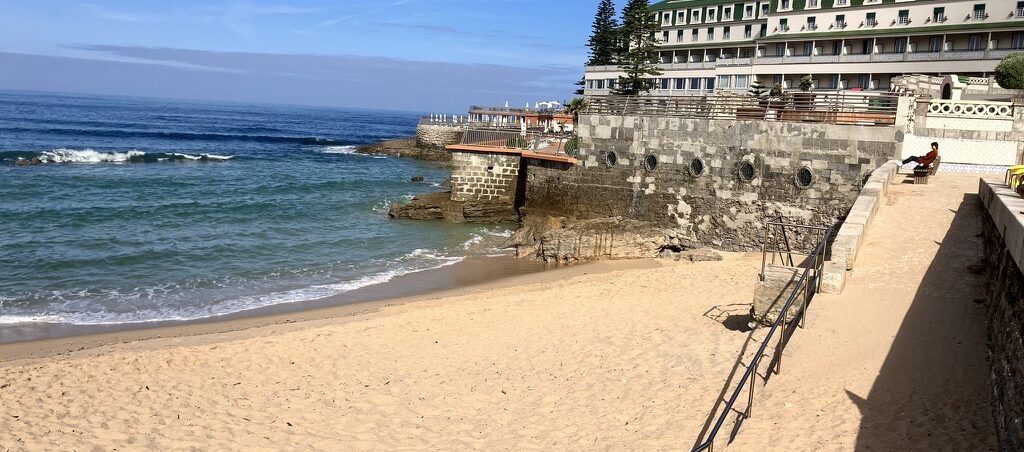
I tell people I lost my heart in Ericeira. The ocean swept up my recklessness one June morning as I leapt forward into the freezing water—missing the icebaths back home. Exiting the freezing Atlantic to the crisp breeze of Portugal’s coastal surf town, I lost something without realizing it.
Grief struck later, searching the mirror with a phantom touch to a beloved Malachite necklace, missing; the accommodation quiet with guests already out surfing the coastline. It was only my first month into travel, and here I stood, alone in a hostel built like the 70s. My touchstone had travelled with me across the world from Guatemala to remind me to recall my ‘heart centre’ navigating life. But now was nowhere in sight. Looking at the floor, a sadness washed over me for being so foolish as to lose my precious trinket; feeling as a sailor might, subtracting the skill to operate a boat, losing a personal memento to the unforgiving sea.
Malachite, or Cu₂CO₃ (OH) ₂ for your crystal fanatics, is a vibrant green stone formed by copper minerals reacting with carbon dioxide dissolved in water. In certain Western esotericism, borrowing greedily from Hinduism and Buddhism, I might add, Malachite symbolizes the connection to the Anāhata—or Heart Chakra—in the seven-chakra system. At least, that’s what the Guatemalan salesman perched downtown in San Marcos La Laguna convinced me of when I bought it. Whether you believe wearing such talismans endow mystical powers—speaking personally, I still haven’t purchased my astrological bangle after Yogananda’s Autobiography of a Yogi but that’s just me—the sentimental artifact was a call to remember my heart space after a shift in me during my trip to Guatemala.
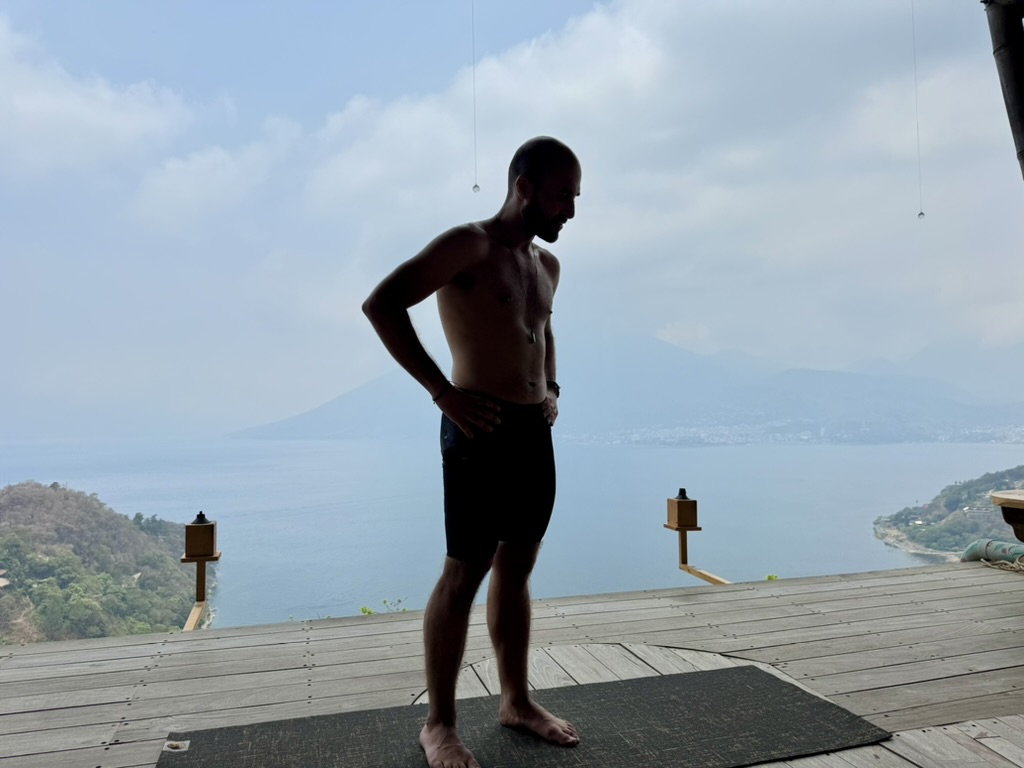
The year prior to my loss in Portugal, seeking escape from the dull Toronto remote work loop I inhabited, I travelled to Lake Atitlan. The lagoon was awash in a strange spectrum of conscious living, small local communities, and expats. Everything from dark cave retreats to mystical pyramids and yoga-non-stop, the adventure was the first time, in a long time, that something moved me in my ‘heart centre’; starting from a mug of chocolate.
Sitting in the ceremony grounds, the circle gazed about, delighted with the sweet and melodious choir; informed about the ‘heart medicine’ to be passed clockwise around the circle. Imagine a ragtag assortment of Western ‘seekers’ and Mayan cultural figures joining in a sermon of sorts, inclusive of music, singing, and eventual dance. A large blue plastic bowl sits up front. With metal ladles plunged into the brew, the hard-working hands of the local Guatemalan women who harvested, owned, and prepared the cacao for us, lay resting. They designed the space like a temple. Trees barricade all sides around a central altar and podium, yielding to a skylight above. I sit cross-legged, barefoot on the stone ground with a group that numbers in the 50s.
The acclaimed medicinal plant cacao, known for its milk-chocolate fanfare, is a central feature of Mayan culture in the Americas. Known for its gentle euphoria, caused by high theobromine and anadamide content, the plant possesses a venerated “spiritual quality” too — posited for its capacity to “open the heart”. Strangely, science connects some of these dots loosely, too. If theobromine gives us the stimulus, anandamide the present ‘bliss’, then phenylethylamine is the alleged “love molecule” contained in raw cacao mass (working in concert with MAO-inhibiting polyphenols). Connecting the three, you have a potent drink with the energy of coffee, the calm of a mild tea, and the heart-warming effect of, well, a dark chocolate bar.
In a gentle, mandated silence, outside of cacao ritual songs, mugs journey person-by-person around the circle in ceremony. The facilitator, a glowing woman in her mid-thirties I’d guess, holds the microphone next to what I assume is her partner, a handsome fellow with a guitar and suede hat; both adorning a pleasant emptiness from self-consciousness. As the mugs pass, the facilitator encourages us to “pass love through the eyes” rather than with our words. Each person sets an intention with the mug as it passes around.
A woman to my right, aged around forty travelling alone from her children, brown curled and dangling hair with small crow’s feet around her eyes, hands me a mug of chocolate with loving affection; receiving her silent kind eyes, I wonder to myself: are these the same “loving eyes” that her children might receive back home? That idea, the purity of it, makes me shudder and feel self-conscious enough to look at the floor.
Dutifully, I accept the warm clay mug. Outfitting it with my own kind wishes for its journey, I pass it along to my left. Turning now into another person’s eyes, I try my best to, “Do so with love”. I don’t really know what that means though.
As I look, I peer into their eyes and try to impart a message. A subtle witnessing of the “I that knows me”, as Watts might say. Detaching for a moment, I remind myself that this other consciousness possesses also the darkness of their own head; feels probable insecurities, existential worries and pains; and as Deepak Chopra reminds me, will one day die, just like me. Humility flavours the last part.
In remembering, I soften. Just because I know nothing about this person doesn’t mean I cannot witness them: another confused monkey, like me, trying their best in the world. Not having an image or their backstory lends me the privilege, also, to see them just as they are. I don’t quite know if that’s how you pass love, but that’s what I tried. The person seemed to receive my clumsy intentions with a Duchenne smile and softness, anyway.
Finally, the circle established a full inventory of cacao. The facilitator tells us to close our eyes and visualize roots growing into the ground; symbolism for our connection to the earth. I imagine a glowing red light from my Root Chakra, swirling below the base of my spine; soon it sprouts a network into the floor as I hold the small mug venting a sensual aroma. As roots spawn, they grow and thicken until I feel I’m entrenched and fixed; rooted, like a tree, attached to the earth.
“Each moment in your life,” The facilitator begins, “Has led to this exact moment.”
I take stock of her comment. Feeling through the years of self-contempt that accompanied me; each dark moment, loneliness or difficulty, has led me to this place. By some stroke of magic, an old, offhand dream of coming to the lagoon years ago had come true. Yet, I only remembered it when I stepped foot into my accommodation days earlier with a sense of wonder. A wave of warm gratitude circulates through my body. Here at the lake, all I’ve done is yoga, dance, and meditation — feeling a profound sense of home in just being. There isn’t a FIRE number here, or need to demonstrate a coherent career story, or worry about whether my life is on track (it never seems to be); there’s just a sense of presence, aliveness and now.
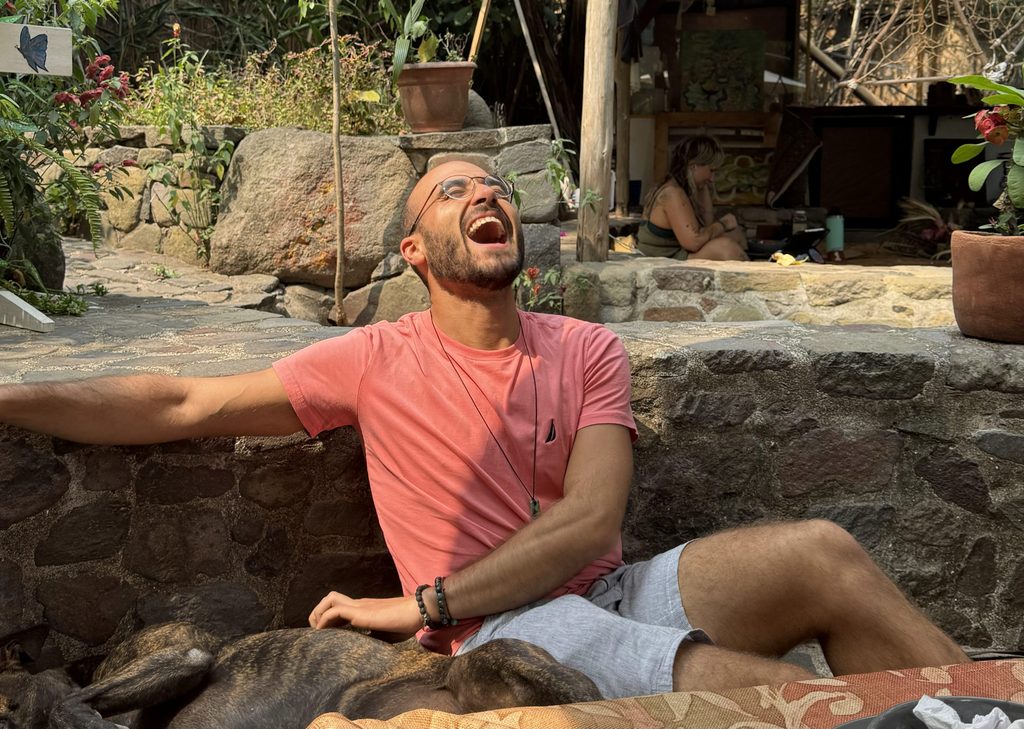
Small tears pool in my eyes and roll down my cheeks. A warm mug held next to my breast, my heart beats slow. I imagine “love” inside the cup, attempting to invite it in. Yet I feel resistance too. Do I even deserve it? I don’t know. My natural answer would be no. But I think back to a moment lying on the floor in a sad state in my Toronto apartment. I have my life together, so why am I unhappy? That feeling triggered this excursion to just, “Get away and do yoga.” landing me at the lagoon, and now in this strange, tender moment.
I try to let go of my rational tendencies, if just for a second, to play for a moment with the idea. Can I let love in — even by just a crack in the doorway? Maybe not forever, but just for a second? I try, and Lord knows, it is difficult. Yet, I feel a short wave of relief. In the next instance, I see every single moment of rejection led to this minor point of self-compassion; I couldn’t have one without the other. In this compassion, I feel a deep sense of home in the world, though I can’t explain why; I mean, I’m in a jungle with a group of strangers in Central America near a massive lake at an “Ecstatic Dance Temple”; this couldn’t be further from what the social definition of what “home” sounds like. And yet, here I am.
Invited to sip our cacao slowly and feel into the heartwarming effects before the ecstatic dance begins, I drink. Clear that there’s only a dab of honey in the brew, my tongue recoils a bit from its first meet. Mild tones of cinnamon, chili peppers and turmeric spin through my senses, along with a delicious chocolate note. Slowly, though, like a budding romance, we start out as strangers, exchanging only brief words, then settling into long stretches of comfortable silence, simply enjoying each other’s presence. With every sip, I meet my cacao deeper, and I fall for it a little more each time. Its warm, flavourful taste fills me until the mug runs dry. Look, I don’t know if “Mama Cacao” is real, or if I just want her to be, but sitting there I felt something loving within me.
I open my eyes in satisfaction. Bodies, once sitting, have risen to move and sway; a DJ has replaced the choir and mounted the decks. The sound is not fast-paced, but musical. Violins, pianos, and strings. A legato holding a sharp, high sound as it gallivants between harmonious chords; a piano rings out the melody from a film score I can’t recall, improvised by the technician in front. Gathering to my feet, it’s time to dance.
Spinning, twirling, jumping, smiling, laughing — I don’t know anyone here, but it feels like we belong. There are no mobile phones or cameras either. Just the still image photographs our memories will preserve until they warp and decay. As the music’s speed increases and the rhythm solidifies, we hear everything from Organic Dubstep to House Music to Psychedelic Trance. I immediately spot, wave to, and smile at the woman from the circle.
“I feel so free!” She says as she throws her hands in the air and shakes them.
As dusk turns to night, the Ecstatic Dance Temple closes its doors. We exit the tall gates into a blinding array of white headlights from the motor-taxis anticipating our departure. My group makes it to the last boat, gliding over the water back to San Marcos. Days later, I bought my “heart centre” necklace and then headed home. A reminder to try to “let love in.” The same necklace that now seems missing from the mirror in Portugal. Pulled back to reality, my heart drops a bit; I fumble away my toiletry bag, trying to avoid the disappointment, and exit to the dorm room to get dressed.
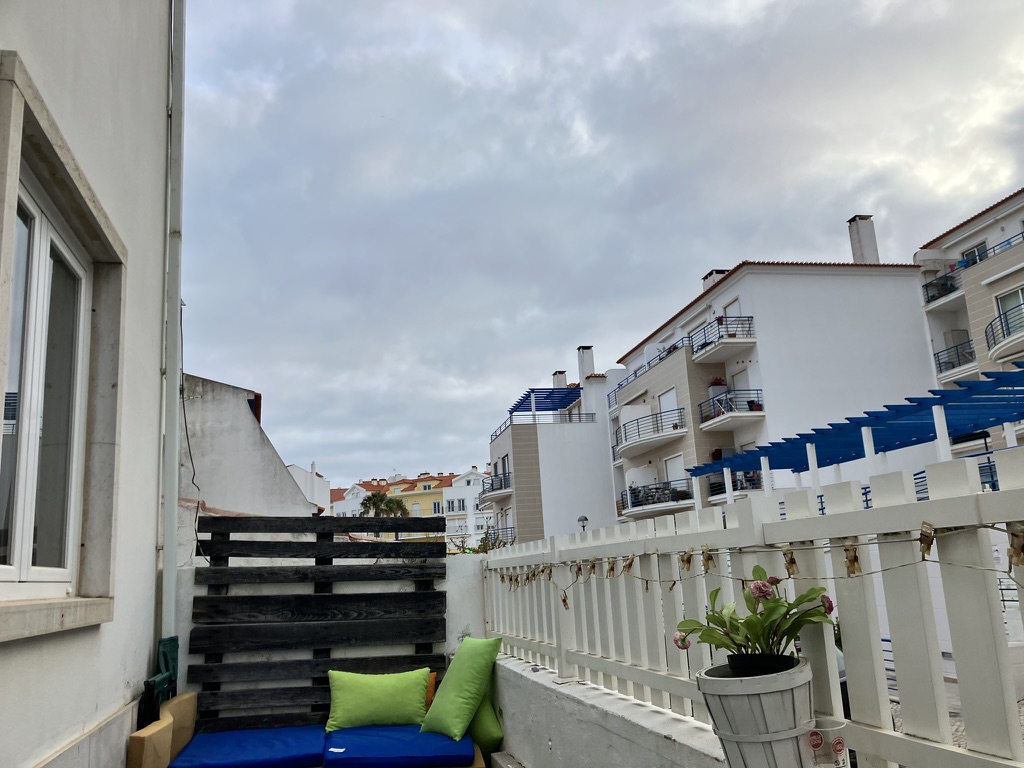
I’ve extended my stay twice here at the 70s Hostel; a product of accidental belonging. The owner is a Spanish national who speaks rapid Portuguese. Here, I’ve celebrated a travelling musician’s twenty-sixth birthday — he had not had a proper celebration for three-years. Surfed with a group on the coast — they kept inviting me out to ride. Joined an all-night rave in the middle of a farmland field — a collective morning plunge community tipped me off. And hosted a small cacao gathering with strangers to share heartwarming mugs — the health food store around the corner gave me the idea. Each experience carried familiar and new faces as the hostel guest inventory rotated. And a peculiar sense of openness to connect, meet, and be; something I find missing in large cities in North America and elsewhere. Yet the hostel patio remains the strongest wonder to me.
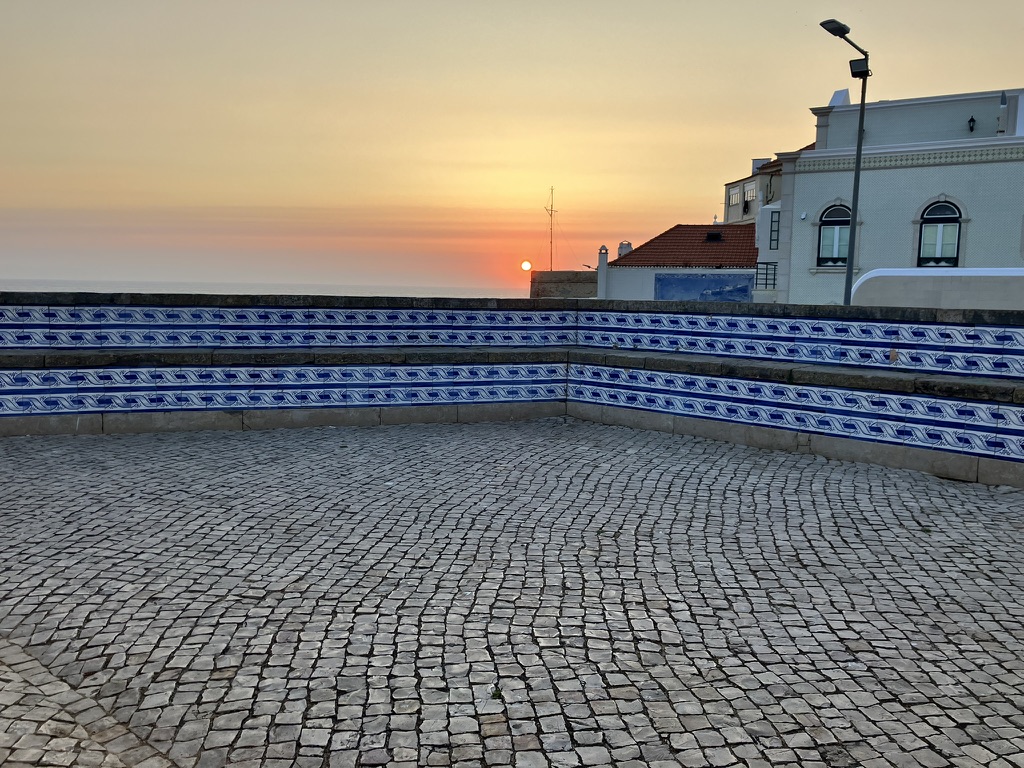
Sitting confused about my apparent fate — life post-mythology hasn’t been the clearest route — the shining eyes of a woman walking down the cobblestone gaze in my direction. Something feels important about it, but I can’t explain why. She and I ended up becoming close, discussing philosophy, yoga, life, and Terrence McKenna.
Her enchantingly intense eyes cast on me one evening, seeing that I was slumping in my chair, “How are you really doing?” She asked, placing a soft touch on my arm.
“I really don’t know.” I said, unguarded. This entire sabbatical trip was supposed to help me find clarity in what to do with my life; so far, the tape has been disappointing.
She didn’t clear the table of my messy confusion with chipper positivity. Attempting to sweep the situation under the rug and to the next exciting topic. In part, my guess is because I held out an honest, vulnerable hand. I didn’t pretend to know what I felt other than sad and worried. She just kept her hand on my arm and looked at me. I felt seen.
Eating ice cream and watching the sunset on the coast, I felt strangely connected for only a few days of knowing her — even if she teased my ice cream choice. A strange resonance, rhyming with the feeling in Guatemala and later in Northern Thailand, threaded throughout; but within the experiences, it was neither the places nor the activities, but the people along the way, that touched my ‘heart centre.’
As I trekked to the bus station on the morning of my departure — 40L Osprey backpack digging into my shoulders, neck kinked from a night on the hard bunk-bed before — I still felt I had lost something. Yes, the necklace was gone, but the stone was never the point; It was a symbol pointing to the capacity for openness, learning how to let our guard down and open up from the scripts of how things should be.
Jim would have said,
“Let life touch you. Let sad things make you sad. Let happy things make you happy; then become so sophisticated that you learn to laugh with those that laugh and cry with those that cry. Let life touch you, but don’t let it kill you.”
I tell people I lost my heart in Ericeira—to the ocean, to the people, and to the girl—yet I still find it again and again, after a strong cup of loving cacao.